1870
Strasbourg Under Siege
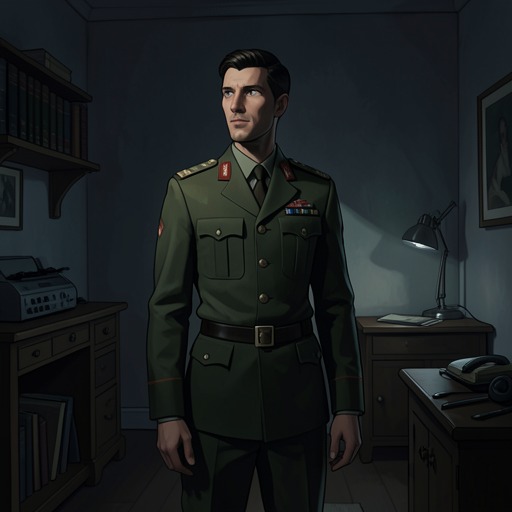
As a sixteen-year-old in [Strasbourg](entity:location-recall-location-835a4f28935f), [Georges Picquart](entity:character-recall-character-georges-picquart-cc2e2d6e9606) witnessed German artillery bombard the city, destroying its library and art gallery and killing people around him. After the garrison surrendered, his family had to choose between remaining under German rule and abandoning their home for [France](entity:location-recall-location-france-f5cafc8a8ad4).
The defeat and exile shaped his loyalty to the army: he came to see military service as a duty to the country and the family world they had lost.
October 1894
The Bordereau Investigation
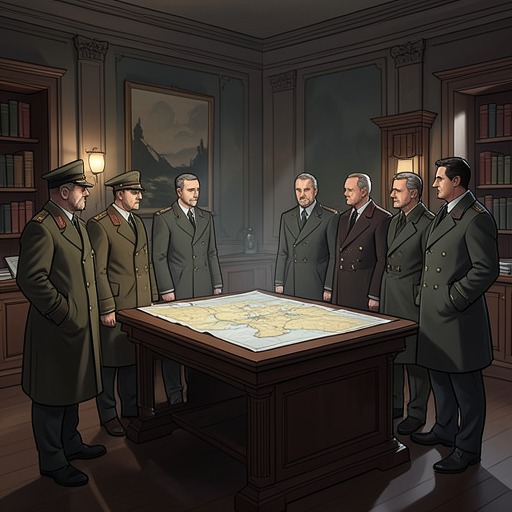
After a torn memorandum known as the bordereau was recovered from the [German Embassy](entity:organization-recall-organization-1c4373318467), the General Staff searched for its author. Its references seemed to point in several directions, but an officer proposed that the culprit must be an artillery-trained stagiaire who had rotated through the General Staff’s departments.
Suspicion gathered around [Alfred Dreyfus](entity:character-recall-character-alfred-dreyfus-8e377813db90), a Jewish officer from [Alsace](entity:location-recall-location-alsace-73ebce91daad) whose family ties to [Germany](entity:location-recall-location-germany-2e3723c2f347) and conspicuous wealth fed existing prejudice. [Georges Picquart](entity:character-recall-character-georges-picquart-cc2e2d6e9606) supplied a sample of Dreyfus’s handwriting; the comparison helped turn suspicion into an accusation.
October 1894
Dreyfus Is Arrested
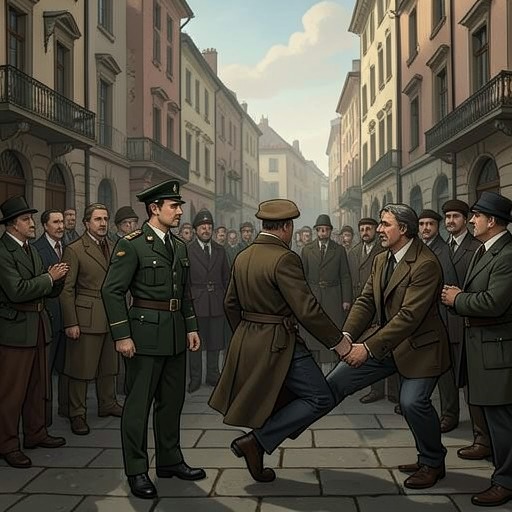
The army lured [Alfred Dreyfus](entity:character-recall-character-alfred-dreyfus-8e377813db90) to the [Ministry of War](entity:organization-recall-organization-ministry-of-war-f41304ec5c3a) under the pretext of a staff inspection. [Georges Picquart](entity:character-recall-character-georges-picquart-cc2e2d6e9606), who knew him from the military school, escorted him toward the Chief of the General Staff’s office without knowing the full plan.
Inside, [Colonel du Paty de Clam](entity:character-recall-character-41f08e8aac02) dictated a letter in an attempt to catch Dreyfus’s natural handwriting. When the officers confronted him, Dreyfus denied the charge and insisted he was innocent. He was taken into secret confinement.
December 1894
The Secret Court-Martial
[Alfred Dreyfus](entity:character-recall-character-alfred-dreyfus-8e377813db90) was tried behind closed doors in a military court, with his lawyer unable to see the secret evidence the prosecution claimed supported its case. The public hearing disclosed how little direct evidence had been presented, but the judges deliberated with the secret dossier withheld from the defense.
[Georges Picquart](entity:character-recall-character-georges-picquart-cc2e2d6e9606) attended as an observer for [Auguste Mercier](entity:character-recall-character-auguste-mercier-36dc96cbbe9b), reporting on the witnesses and the weakness of the prosecution’s case. During the trial, [Hubert-Joseph Henry](entity:character-recall-character-hubert-joseph-henry-10f75785f2db) dramatically accused Dreyfus of being the traitor on the General Staff, swearing to the claim without naming his source.
December 1894
The Secret Dossier
At [Auguste Mercier](entity:character-recall-character-auguste-mercier-36dc96cbbe9b)’s direction, [Georges Picquart](entity:character-recall-character-georges-picquart-cc2e2d6e9606) delivered a sealed dossier to the presiding judge while the court was considering its verdict. The material was never disclosed to [Alfred Dreyfus](entity:character-recall-character-alfred-dreyfus-8e377813db90) or his lawyer, [Edgar Demange](entity:character-recall-character-edgar-demange-4c6c706dbd61), and therefore could not be challenged in court.
The dossier’s secret submission helped secure a unanimous conviction. Picquart later understood that its contents were a patchwork of hearsay, insinuation and material whose relevance to Dreyfus was unproven.
5 January 1895
Public Degradation
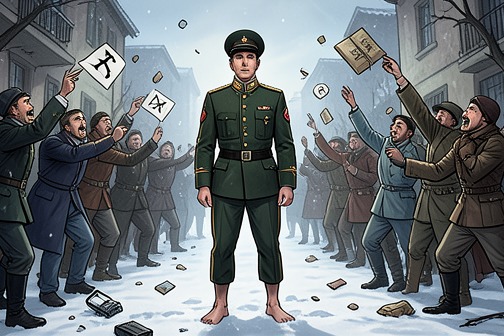
On a freezing morning at the [École Militaire](entity:location-recall-location-cole-militaire-acb859eed4d9), [Alfred Dreyfus](entity:character-recall-character-alfred-dreyfus-8e377813db90) was stripped of his rank before a crowd of roughly twenty thousand people and thousands of soldiers. As his insignia and sword were torn away, he repeatedly declared his innocence; spectators answered with antisemitic abuse, including cries of [“Death to the Jew!”](entity:expression-recall-expression-death-to-the-jew-d45331b69a68)
[Georges Picquart](entity:character-recall-character-georges-picquart-cc2e2d6e9606) watched the spectacle and afterward reported its details to [Auguste Mercier](entity:character-recall-character-auguste-mercier-36dc96cbbe9b) and [Raoul le Mouton de Boisdeffre](entity:character-recall-character-raoul-le-mouton-de-01851e9dbfbe). He still believed Dreyfus guilty, yet the ceremony’s brutality and public hatred would become part of the moral burden he later carried.
5 January 1895
The Confession Rumor
After the degradation, [Georges Picquart](entity:character-recall-character-georges-picquart-cc2e2d6e9606) learned that Captain [Lebrun-Renault](entity:character-recall-character-lebrun-renault-00af25e0b269) claimed [Alfred Dreyfus](entity:character-recall-character-alfred-dreyfus-8e377813db90) had confessed while in custody. Picquart questioned the story: it clashed with Dreyfus’s public declarations of innocence and sounded implausible in the circumstances.
The report nevertheless reached newspapers and alarmed the government, which feared a diplomatic confrontation with [Germany](entity:location-recall-location-germany-2e3723c2f347). The episode exposed how careless talk by an officer could turn a disputed prison-room exchange into an international crisis.
January 1895
Mercier Chooses Devil’s Island
[Auguste Mercier](entity:character-recall-character-auguste-mercier-36dc96cbbe9b) decided that [Alfred Dreyfus](entity:character-recall-character-alfred-dreyfus-8e377813db90) should be sent to [Devil’s Island](entity:location-recall-location-devil-s-island-177c17447dab), where isolation would prevent him from communicating with the outside world. He described the remote penal colony as a secure place from which Dreyfus could not escape or send messages.
[Georges Picquart](entity:character-recall-character-georges-picquart-cc2e2d6e9606) recognized the almost literary extremity of the punishment, but [Mercier](entity:character-recall-character-mercier-61b40f0075c0) welcomed its power to seize the public imagination. The decision turned a conviction into a sentence of prolonged isolation and made the government responsible for maintaining an elaborate system of guards and censorship.
January 1895
Picquart’s Promotion
[Charles-Arthur Gonse](entity:character-recall-character-charles-arthur-gons-f9170f2c05da) visited [Georges Picquart](entity:character-recall-character-georges-picquart-cc2e2d6e9606) and offered him command of the [Statistical Section](entity:organization-recall-organization-statistical-sect-310f92bc3c4e), with promotion to colonel. The appointment was presented as recognition of Picquart’s conduct during the Dreyfus affair and as a route toward high command.
Picquart disliked the grubby secrecy of intelligence work, but ambition and duty overcame his reluctance. He accepted, not yet aware that the post would place him at the center of the evidence that could undo Dreyfus’s conviction.
January 1895
The Family’s Exile
During a weekend visit to his elderly mother in [Versailles](entity:location-recall-location-versailles-b6a47c263b79), [Georges Picquart](entity:character-recall-character-georges-picquart-cc2e2d6e9606) read reports of the degradation and the alleged confession. At lunch with friends from [Alsace](entity:location-recall-location-alsace-73ebce91daad), he defended the secret trial and insisted that the army possessed substantial evidence against Dreyfus.
The conversation showed how thoroughly antisemitic assumptions had become part of ordinary social life, including among people who considered themselves republican. Picquart’s confidence in the army’s case was still firm, and his own prospects seemed to be rising.
January 1895
Dreyfus Leaves France
Twelve days after the degradation, [Alfred Dreyfus](entity:character-recall-character-alfred-dreyfus-8e377813db90) was transferred from [Paris](entity:location-recall-location-paris-c02b439ce220) to the [Île de Ré](entity:location-recall-location-le-de-r-c99c7007911b), then shipped across the Atlantic. At [La Rochelle](entity:location-recall-location-a1f9bdea9824), a hostile crowd surrounded the transport and shouted abuse as guards moved him under cover of darkness.
His letters recorded his appeal for justice and his increasing fear that his words would never reach his wife. The correspondence later gave [Georges Picquart](entity:character-recall-character-georges-picquart-cc2e2d6e9606) a close view of the suffering hidden behind the official language of punishment.
February–March 1895
Arrival on Devil’s Island
After a brutal sea voyage, [Alfred Dreyfus](entity:character-recall-character-alfred-dreyfus-8e377813db90) was taken first to Royal Island and then to [Devil’s Island](entity:location-recall-location-devil-s-island-177c17447dab), where he was confined in a small hut and watched by armed guards. He was forbidden to speak with them, locked in every evening and left to cook and care for himself in the tropical heat.
His letters described sleeplessness, vermin and isolation so complete that he felt buried alive. In [Paris](entity:location-recall-location-paris-c02b439ce220), the Colonial Ministry and army copied and scrutinized his correspondence, extending the prison’s reach across the ocean.
June 1895
The Statistical Section
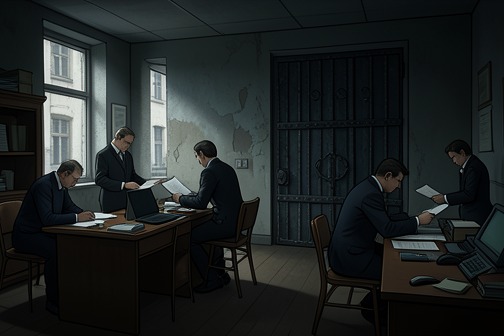
[Georges Picquart](entity:character-recall-character-georges-picquart-cc2e2d6e9606) took command of the [Statistical Section](entity:organization-recall-organization-statistical-sect-310f92bc3c4e), a clandestine unit housed in a shabby building near the [Ministry of War](entity:organization-recall-organization-ministry-of-war-f41304ec5c3a). Its staff secretly opened mail, cultivated informants and reconstructed scraps of documents removed from the [German Embassy](entity:organization-recall-organization-1c4373318467).
[Hubert-Joseph Henry](entity:character-recall-character-hubert-joseph-henry-10f75785f2db) showed Picquart the unit’s chief source, the cleaner [Marie Bastian](entity:character-recall-character-marie-bastian-36d4e71e0cef), and explained how she passed material to him. Picquart began tightening security and asserting control, setting a more disciplined tone but also deepening his tensions with [Henry](entity:character-recall-character-henry-c166031952d6).
June 1895
The Spy Network Inherited
[Jean Sandherr](entity:character-recall-character-jean-sandherr-f218dd734eb8), Picquart’s dying predecessor, handed over a collection of agent reports, money and lists of people the army planned to arrest or intern if war came. He also spoke openly of collective suspicion toward foreigners and Jews, revealing how intelligence work could convert prejudice into administrative policy.
Picquart recognized that Sandherr’s covert service operated through personal loyalties, informers and poorly controlled secrets. He nonetheless accepted the inheritance, assuming that he could bring order to the unit without yet challenging its central assumptions.
Summer 1895
Watching the Dreyfus Family
Picquart learned that the unit was monitoring [Alfred Dreyfus](entity:character-recall-character-alfred-dreyfus-8e377813db90)’s wife and brother, intercepting their mail and using servants as informants. [Mathieu Dreyfus](entity:character-recall-character-mathieu-dreyfus-829cc07a66fb) was trying to find influential people who might help secure a review of his brother’s case.
The surveillance uncovered that the president had disclosed the existence of evidence shown secretly to the judges. Picquart saw how damaging that fact could be if it became public, even though he still believed the verdict itself was correct.
Summer 1895
Letters from Devil’s Island
Reading the censored correspondence at home, [Georges Picquart](entity:character-recall-character-georges-picquart-cc2e2d6e9606) encountered [Alfred Dreyfus](entity:character-recall-character-alfred-dreyfus-8e377813db90)’s letters to [Lucie Dreyfus](entity:character-recall-character-e48a0be64bca). They described despair, love for his family and repeated pleas that someone continue investigating the case.
Picquart dismissed the prisoner’s professions of innocence as the expected words of a convicted man, but the letters unsettled him. The intimacy of the correspondence forced the intelligence officer to see the human cost of a punishment he had previously regarded as settled policy.
Autumn 1895
The First Doubt
At social gatherings, [Blanche de Comminges](entity:character-recall-character-blanche-de-comminge-ddbb1d45419c) suggested that [Colonel du Paty de Clam](entity:character-recall-character-41f08e8aac02)’s romantic and theatrical temperament had shaped the Dreyfus prosecution. Her teasing observation made [Georges Picquart](entity:character-recall-character-georges-picquart-cc2e2d6e9606) consider, for the first time, whether the extraordinary severity of Dreyfus’s punishment concealed uncertainty rather than certainty.
The thought remained small and private. Picquart did not yet question the verdict outright, but he began asking himself why the army continued to spend so much effort on a prisoner who, officially, had already been defeated.
March 1896
The Petit Bleu
Among a new delivery of torn papers from [Marie Bastian](entity:character-recall-character-marie-bastian-36d4e71e0cef), [Captain Lauth](entity:character-recall-character-captain-lauth-9de4138534e4) reconstructed a blue telegram card addressed to Major Esterhazy. The message, signed with an initial, asked for a fuller explanation of business connected with the “house of R.”
Picquart recognized that the address belonged to an officer in the French army. He ordered the discovery kept quiet and opened a private investigation rather than immediately alerting the General Staff, fearing that a leak could warn the suspect.
March 1896
A Second Spy
A second reconstructed message showed Esterhazy discussing payments, sketches and the costs of continuing his relationship with the German attaché. Picquart considered whether the documents could be a German trap, but the complaints about money and the military detail fit what he was beginning to learn about the major.
The discovery gave the intelligence section a plausible French officer to investigate. It also introduced the central danger: the evidence came from material secretly taken from the embassy and could not safely be used in court without exposing the source.
Spring 1896
Curé’s Warning
Picquart traveled to [Rouen](entity:location-recall-location-rouen-bcf96910455d) to question his old comrade [Albert Curé](entity:character-recall-character-albert-cur-cc87b7a202ae) about Esterhazy. Curé described a debt-ridden officer who gambled, neglected his duties and displayed a suspicious appetite for artillery exercises and restricted manuals.
The account strengthened Picquart’s suspicion that Esterhazy had both motive and opportunity to sell military information. Curé also warned that the major was well connected and dangerous, so Picquart arranged to investigate him discreetly.
Spring 1896
Surveillance Begins
Picquart assigned the inquiry to the police officer [Desvernine](entity:character-recall-character-3dce26c70ad1), deliberately choosing someone outside [Hubert-Joseph Henry](entity:character-recall-character-hubert-joseph-henry-10f75785f2db)’s immediate circle. Desvernine traced Esterhazy’s gambling debts, his costly mistress and the financial arrangements that left him under constant pressure.
The investigation suggested a man willing to betray others for money, but character and motive were not proof of espionage. Picquart kept looking for direct links between Esterhazy and the [German Embassy](entity:organization-recall-organization-1c4373318467).
Spring 1896
Operation Benefactor
To watch the [German Embassy](entity:organization-recall-organization-1c4373318467) without drawing attention, [Georges Picquart](entity:character-recall-character-georges-picquart-cc2e2d6e9606) and [Desvernine](entity:character-recall-character-3dce26c70ad1) rented an apartment opposite it and placed Germain Ducasse there under a plausible cover. The team installed cameras and a telescope to record who entered and left.
Picquart obtained Gonse’s reluctant permission to take the operation further. A disguised chimney sweep later installed listening tubes through the embassy apartment’s flues, allowing the French to overhear fragments of conversations without openly confronting the Germans.
Spring 1896
Esterhazy at the Embassy
The surveillance team photographed Esterhazy entering the [German Embassy](entity:organization-recall-organization-1c4373318467) with an item in his hand and leaving without it. A later photograph clearly showed him returning to the embassy, providing visual confirmation of contact with the German intelligence service.
The images supported Picquart’s case but did not reveal exactly what Esterhazy had delivered. To establish the importance of the relationship, Picquart needed further evidence and a clearer account of what the Germans themselves believed.
Summer 1896
News from Berlin
[Colonel Foucault](entity:character-recall-character-ee02c7bbb242) told Picquart that [Richard Cuers](entity:character-recall-character-9dac7cdec9a2), a former German agent turned French source, claimed German intelligence had another French army spy. The agent was a major, roughly middle-aged, had supplied artillery information and had attended a gunnery course at [Châlons](entity:location-recall-location-ch-lons-44f3e79e1d28).
The details fitted Esterhazy closely. More alarming still, Cuers said the Germans had never employed [Alfred Dreyfus](entity:character-recall-character-alfred-dreyfus-8e377813db90) and were angry that the French had accused them of doing so. Picquart now had reason to doubt the foundation of the original conviction.
August 1896
Picquart Briefs His Staff
Picquart told [Hubert-Joseph Henry](entity:character-recall-character-hubert-joseph-henry-10f75785f2db) and Lauth about the evidence against Esterhazy and the planned meeting with [Richard Cuers](entity:character-recall-character-9dac7cdec9a2) in [Basel](entity:location-recall-location-basel-675a2b264415). He assigned Lauth to conduct the interview in German, with [Henry](entity:character-recall-character-henry-c166031952d6) added as support after Lauth asked for his experience.
Picquart did not yet tell them that Cuers said Dreyfus had never been a German agent. He hoped to gather reliable details first, but allowing Henry into the operation gave his deputy an opportunity to control what the team would learn.
6 August 1896
The Basel Debriefing
Lauth, [Henry](entity:character-recall-character-henry-c166031952d6) and two police officers met [Richard Cuers](entity:character-recall-character-9dac7cdec9a2) in [Basel](entity:location-recall-location-basel-675a2b264415). Henry took over much of the conversation, discouraged the source and left before the interview was over; Lauth later reported that the meeting had yielded little.
Picquart suspected the failure had been deliberate, but could not prove it at first. Subsequent accounts from Foucault and the police officer Tomps confirmed that Henry had bullied Cuers and rejected a chance to continue the interview over drinks.
August 1896
The Bordereau Match
Major Esterhazy’s letters seeking a transfer to the General Staff reached Picquart. Their handwriting matched the bordereau, and their preoccupation with artillery manuals echoed the document’s contents.
Picquart took photographs to [Alphonse Bertillon](entity:character-recall-character-alphonse-bertillon-6a9ca35db24b), the handwriting expert who had helped implicate Dreyfus. [Bertillon](entity:character-recall-character-bertillon-11a8fffe5f3c) pronounced Esterhazy’s writing identical to that of the bordereau, but perversely insisted that this proved the Jews had trained someone to imitate Dreyfus. The handwriting evidence now pointed toward the wrongfully convicted man’s accuser.
August 1896
The Secret File Examined
Picquart examined the secret dossier that had helped convict Dreyfus. It contained a deposition by [Henry](entity:character-recall-character-henry-c166031952d6), fragments of intercepted correspondence and a theory by du Paty de Clam, but no direct proof identifying Dreyfus as the spy.
The material was largely conjectural, and its dates and claims did not fit cleanly together. Picquart realized that the conviction depended on evidence the defense had never seen and that could not withstand ordinary cross-examination.
August 1896
Picquart Confronts Bertillon
Picquart showed [Bertillon](entity:character-recall-character-bertillon-11a8fffe5f3c) the Esterhazy letters beside the bordereau. Bertillon again called the handwriting identical, then refused to reconsider his theory that Dreyfus had deliberately altered his own writing.
Picquart also confronted du Paty de Clam with the handwriting match. Du Paty resisted the implication and warned Picquart that the secret dossier remained relevant, making plain that the investigation threatened men who had built the original case.
Late 1896
The Dreyfus Court-Martial Recalled
As he reviewed the old prosecution, Picquart reconstructed how Dreyfus had been arrested and interrogated. The supposed handwriting changes during du Paty’s dictation were not clearly visible to him, and Dreyfus’s repeated denials had been treated as signs of a trained spy rather than evidence to weigh fairly.
Witnesses had described Dreyfus as arrogant and difficult, while [Henry](entity:character-recall-character-henry-c166031952d6)’s dramatic accusation supplied the court with a supposed intelligence source it could not examine. Picquart began to see how prejudice and circular reasoning had hardened suspicion into certainty.
Late 1896
The Forged Guénée Report
Picquart questioned [Guénée](entity:character-recall-character-gu-n-e-87d260b59a83) about the report claiming that the Spanish military attaché, Val Carlos, had warned of a spy in the intelligence department. Guénée first denied involvement, then retreated into uncertainty when Picquart showed him [Henry](entity:character-recall-character-henry-c166031952d6)’s written account.
The exchange suggested that the alleged warning may never have happened as described. Because Henry had used the story to accuse Dreyfus in court, doubt about the report threatened one of the prosecution’s most theatrical pieces of evidence.
Autumn 1896
The Archive Search
After the General Staff took control of the case and Picquart was increasingly excluded, he secretly searched [Gribelin](entity:character-recall-character-gribelin-ea79af5dd5e9)’s archive during a fireworks display. Among the reconstructed embassy papers, he found a message from a printer named Dubois offering the Germans the secret of smokeless powder.
Cross-references showed that [Henry](entity:character-recall-character-henry-c166031952d6) had already investigated Dubois and concluded that the man sold publicly available information. “D” therefore pointed to Dubois, not Dreyfus. The discovery dismantled a central thread in the secret dossier and confirmed that the intelligence had been interpreted to fit a desired suspect.
Autumn 1896
The Telegram’s True Meaning
Picquart asked [Étienne Bazeries](entity:character-recall-character-tienne-bazeries-bb2bfb0a82b6) to verify the coded telegram sent by [Alessandro Panizzardi](entity:character-recall-character-alessandro-panizzar-38ba4f9e5e39) to Rome after Dreyfus’s arrest. Bazeries revealed that the correct translation asked whether Dreyfus had had dealings with the Germans and urged an official denial if he had not.
The telegram showed that [Panizzardi](entity:character-recall-character-panizzardi-8190adab5df2) did not know Dreyfus as a German agent. Yet the [Ministry of War](entity:organization-recall-organization-ministry-of-war-f41304ec5c3a) had circulated a false interpretation implying the opposite. The real decryption had been delivered to [Auguste Mercier](entity:character-recall-character-auguste-mercier-36dc96cbbe9b) before the court-martial, meaning senior officials had been warned that the secret evidence was unreliable.
Autumn 1896
The General Staff Takes Over
[Charles-Arthur Gonse](entity:character-recall-character-charles-arthur-gons-f9170f2c05da) demanded the secret dossier and reassigned the handling of [Marie Bastian](entity:character-recall-character-marie-bastian-36d4e71e0cef)’s material to [Henry](entity:character-recall-character-henry-c166031952d6). Picquart was told he would soon be sent away on an inspection tour, while Henry and other officers began meeting directly with Gonse.
Picquart understood that he had lost operational control. He could not safely inform the public or the Dreyfus family without revealing secret sources, and he still felt bound by loyalty to the army. The conflict between that loyalty and the need to stop an injustice had become the defining crisis of his life.
Autumn 1896
The Secret File Leaks
[L’Éclair](entity:organization-recall-organization-l-clair-3276b079734b) published an article describing the existence and contents of the secret dossier, including references to intercepted letters and “that animal Dreyfus.” Picquart feared that the leak would make the army panic and use the disclosure to shut down his inquiry.
He could not determine who had supplied the details. The Dreyfus family and its supporters were under surveillance, but officials within the army also had access. The episode demonstrated that secrecy could not be controlled once a large number of people had a reason to manipulate it.
Autumn 1896
Picquart Warns Gonse
Picquart urged Gonse to take the initiative before public revelations trapped the army in an indefensible position. Gonse acknowledged that the original inquiry had been mishandled but argued that reopening it would damage the army and divide the country.
When Picquart insisted that Dreyfus appeared innocent, Gonse ordered him to stop investigating the case and to keep its contents from unauthorized people. Picquart left without accepting the order as morally binding, even though disobedience would destroy his career.
Autumn 1896
Billot Refuses to Act
[Georges Picquart](entity:character-recall-character-georges-picquart-cc2e2d6e9606) presented the handwriting evidence and the secret dossier to Minister of War [Billot](entity:character-recall-character-billot-5faf5a1992eb). Billot recognized the political danger but said he needed time to consider the consequences and allowed Picquart to continue investigating Esterhazy.
When Picquart later pressed for action on Dreyfus, Billot refused to reopen the case. He argued that the army and government could not afford the upheaval, and warned Picquart not to force the issue. The minister’s initial support for an inquiry gave way to institutional self-preservation.
Late 1896
The Forged Alexandrine Letter
[Billot](entity:character-recall-character-billot-5faf5a1992eb) and Gonse confronted Picquart with a new alleged letter from [Panizzardi](entity:character-recall-character-panizzardi-8190adab5df2) saying that no one must admit to relations with Dreyfus. Picquart recognized that it had to be a forgery, but knew that open resistance would expose him to immediate punishment.
He pretended to accept the document’s authenticity and was ordered to hand over his Esterhazy files and leave [Paris](entity:location-recall-location-paris-c02b439ce220) for [Tunisia](entity:location-recall-location-6626db0abe14). The forged letter served both as a weapon against Picquart and as a way to preserve the original verdict by manufacturing new support for it.
October 1896
The Tsar’s Visit
[Nicholas II](entity:character-recall-character-nicholas-ii-d0bbe7c3bc72) and [Alexandra](entity:character-recall-character-alexandra-d152cf4180a2) visited [France](entity:location-recall-location-france-f5cafc8a8ad4) amid elaborate security preparations and immense public celebration. [Georges Picquart](entity:character-recall-character-georges-picquart-cc2e2d6e9606) attended part of the procession with [Pauline Monnier](entity:character-recall-character-pauline-monnier-e53f1b7eefec), while officers from the [Statistical Section](entity:organization-recall-organization-statistical-sect-310f92bc3c4e) watched their relationship with disapproval.
The visit revealed the political priorities of the moment: the government prized its alliance with Russia and its international prestige. The Dreyfus affair was temporarily pushed aside in public, but the spectacle did nothing to resolve the evidence Picquart had uncovered.
Late 1896
Picquart Is Sent to Tunisia
[Billot](entity:character-recall-character-billot-5faf5a1992eb) ordered Picquart out of [Paris](entity:location-recall-location-paris-c02b439ce220) on a sequence of assignments that carried him through military posts and eventually to [Tunisia](entity:location-recall-location-6626db0abe14). The transfers were presented as service duties, but their duration and repetition made clear that he was being kept away from the investigation and its political consequences.
In [Sousse](entity:location-recall-location-f66258463d3d), Picquart was watched by an informant and his mail was intercepted. He hid a report on the affair and a letter intended for the President in case of his death, preserving evidence while outwardly submitting to exile.
October 1897
Scheurer-Kestner Intervenes
From [Tunisia](entity:location-recall-location-6626db0abe14), Picquart read that Senator [Auguste Scheurer-Kestner](entity:character-recall-character-auguste-scheurer-ke-978fcdcfd5e0) had publicly declared his conviction that Dreyfus was innocent and would seek to prove it. [Louis Leblois](entity:character-recall-character-louis-leblois-c070d18b08ac) had carried Picquart’s information to the senator without revealing Picquart as its source.
The intervention brought the case back into national politics. Picquart understood that his quiet attempt to place the facts before a responsible figure had become a public challenge to the army’s position.
November 1897
Mathieu Names Esterhazy
[Mathieu Dreyfus](entity:character-recall-character-mathieu-dreyfus-829cc07a66fb) formally accused [Charles Ferdinand Walsin Esterhazy](entity:character-recall-character-charles-ferdinand-w-0c2217976391) of writing the bordereau and committing the treason for which his brother had been condemned. The accusation was widely reported and forced the government to address a concrete alternative suspect.
Picquart’s fellow officers in [Tunisia](entity:location-recall-location-6626db0abe14) responded with familiar antisemitic suspicions, while Picquart knew that the accusation aligned with the evidence he had gathered. The dispute was no longer confined to intelligence offices: the Dreyfus family had named the man Picquart believed to be the true spy.
November 1897
Esterhazy Attacks Picquart
Esterhazy gave interviews accusing Picquart of conspiring with the Dreyfus family and passing secret information to them. He claimed the campaign against him was a plot and used Picquart’s exile as apparent proof that the army had already judged the colonel untrustworthy.
The accusations recast the investigator as the suspect. Picquart’s years of clandestine work and his connection to the case gave the General Staff a way to describe him as a conspirator rather than a whistleblower.
November 1897
Pellieux Questions Picquart
Picquart was returned to [France](entity:location-recall-location-france-f5cafc8a8ad4) under escort and questioned by [General Pellieux](entity:character-recall-character-13e27ef9351c), who focused on discrepancies in Picquart’s reports and whether he had fabricated the petit bleu. Pellieux also brought up coded telegrams, a veiled woman and messages linked to Picquart’s social circle.
The inquiry largely ignored the handwriting match and the substance of the evidence against Esterhazy. Instead, it built a case that Picquart had manipulated documents and conspired with civilians to undermine the army.
November 1897
Pauline Is Exposed
During the inquiry, investigators used Picquart’s private letters to expose his long affair with [Pauline Monnier](entity:character-recall-character-pauline-monnier-e53f1b7eefec). Philippe Monnier learned of the relationship through military channels and expelled his wife, refusing to let her see their daughters.
The pressure turned Picquart’s private life into another instrument of state coercion. He felt responsible for [Pauline](entity:character-recall-character-pauline-17d56a2a28c3)’s suffering and recognized that the authorities were willing to damage families in order to isolate and discredit him.
January 1898
Esterhazy Is Acquitted
A military court rejected the evidence against Esterhazy and declared him innocent. The proceedings were conducted in secret, while military witnesses testified against Picquart and accused him of fabricating the petit bleu and showing the secret dossier to [Louis Leblois](entity:character-recall-character-louis-leblois-c070d18b08ac).
The verdict was a devastating reversal: the officer Picquart believed guilty was cleared, while the man who had exposed him was treated as the real culprit. The army had protected its original judgment by sacrificing the possibility of a fair examination of the evidence.
13 January 1898
Zola Publishes J’Accuse
[Émile Zola](entity:character-recall-character-mile-zola-01ca77e15b6c) published his open letter [J’Accuse…!](entity:expression-recall-expression-j-accuse-ccbb37d75f07) in [L’Aurore](entity:organization-recall-organization-l-aurore-4bb2f61adbf8), accusing senior officers and officials of engineering and concealing a miscarriage of justice. He named the military leaders and challenged them to prosecute him in public.
The article made the affair impossible to contain within the army. It gave the public a coherent account of the cover-up and placed [Georges Picquart](entity:character-recall-character-georges-picquart-cc2e2d6e9606)’s role as a truth-seeker before a mass readership.
February 1898
Zola’s Libel Trial
The government prosecuted Zola for libel, hoping to restrict the hearing to a narrow dispute and prevent a full examination of the Dreyfus case. Picquart testified about the evidence against Esterhazy and the effort to silence him.
When [Henry](entity:character-recall-character-henry-c166031952d6) and other officers accused Picquart of exposing the secret dossier, Picquart denied it and challenged their accounts. Under pressure, the contradictions became visible, though the court still convicted Zola and sentenced him to prison.
February 1898
Henry Lies Under Oath
At Zola’s trial, [Henry](entity:character-recall-character-henry-c166031952d6) claimed Picquart had shown the secret dossier to Leblois, while Lauth and [Gribelin](entity:character-recall-character-gribelin-ea79af5dd5e9) backed his account. Their dates and descriptions failed to withstand questioning, and Leblois demonstrated that he had been elsewhere at the time Henry alleged.
The testimony exposed how the intelligence officers had shifted from defending the Dreyfus prosecution to constructing a case against Picquart. It also made their loyalty to the institution look increasingly like a willingness to lie for it.
February 1898
The Forged Proof Revealed
During the Zola proceedings, [General Pellieux](entity:character-recall-character-13e27ef9351c) invoked a supposedly irrefutable letter proving Dreyfus’s guilt. Picquart recognized it as the suspicious “Alexandrine” document and told Labori that it was a forgery.
In open court, Picquart declared that the document was fabricated, directly challenging the General Staff’s version of events. The revelation shifted attention from his supposed misconduct to the army’s use of forged evidence.
February 1898
Picquart’s Dismissal
After the Zola trial, Picquart was dismissed from the army for alleged grave misconduct and stripped of the career he had spent his adult life building. He left [Mont-Valérien](entity:location-recall-location-4b42b86983e3) as a civilian, with a reduced pension and a warning to remain silent.
As he was taken away, he read the headline of Zola’s [J’Accuse…!](entity:expression-recall-expression-j-accuse-ccbb37d75f07) and saw his own actions publicly defended. The article did not free him or Dreyfus, but it transformed his isolation into a visible political struggle.
March 1898
The Challenge to Henry
After [Henry](entity:character-recall-character-henry-c166031952d6) called Picquart a liar in open court, Picquart challenged him to a duel. Henry initially refused, claiming that a cashiered officer had no honor to defend, but later accepted after Picquart’s representatives insisted on the point.
They fought with swords at the [École Militaire](entity:location-recall-location-cole-militaire-acb859eed4d9). Henry attacked aggressively, but Picquart wounded his arm and damaged the nerve in his elbow, forcing him to withdraw. The duel briefly reversed their public roles, leaving Henry physically beaten and Picquart’s honor intact.
Spring 1898
Christian Esterhazy’s Revelation
[Christian Esterhazy](entity:character-recall-character-d7cb88329d7e) told Picquart and Labori that his cousin had defrauded his widowed mother of her inheritance. He also described serving as a message carrier between Esterhazy and [Colonel du Paty de Clam](entity:character-recall-character-41f08e8aac02), including the forged telegrams used to compromise Picquart.
Christian’s account connected Esterhazy directly to the campaign against Picquart and suggested that du Paty had helped orchestrate it. His testimony gave the magistrate Bertulus a new witness in the investigation into forgery.
Summer 1898
Esterhazy Attacks Picquart
Esterhazy continued threatening Picquart and publicly demanded a duel, portraying himself as a persecuted man. When Esterhazy attacked Picquart with a red cane on a [Paris](entity:location-recall-location-paris-c02b439ce220) street, Picquart defended himself, knocked him down and warned him that he would soon face criminal charges.
Picquart refused to fight Esterhazy in a formal duel, insisting that the traitor belonged before a court rather than on a field of honor. Their street encounter showed how far the affair had escaped the controlled procedures of the army.
7 July 1898
Cavaignac’s Parliamentary Proof
The new Minister of War, Cavaignac, addressed the [Chamber of Deputies](entity:organization-recall-organization-chamber-of-deput-0bfb81cf4882) and presented three intelligence documents as conclusive proof of Dreyfus’s guilt. One was the forged “Alexandrine” letter, which Cavaignac read aloud to an approving chamber.
At a gathering with Zola and Clemenceau, Picquart realized that the government was using a forgery to revive the case against Dreyfus. He decided he had to challenge the official account publicly, whatever the consequences.
July 1898
Picquart Writes to Brisson
With Labori’s help, Picquart sent Prime Minister [Henri Brisson](entity:character-recall-character-826bf144ca38) an open letter stating that two of Cavaignac’s documents could not implicate Dreyfus and that the third showed signs of forgery. He argued that the Minister of War had been misled and urged a competent tribunal to examine the evidence.
The government charged Picquart with illegally revealing documents important to national defense. He and Leblois were arrested, while Picquart was placed in [La Santé Prison](entity:location-recall-location-la-sant-prison-481cb5dab36d) and held in isolation.
August 1898
Henry Confesses
A review of the intelligence file revealed that the supposedly authentic “Alexandrine” letter had been assembled from different pieces of paper. Under questioning by Cavaignac, [Henry](entity:character-recall-character-henry-c166031952d6) admitted that he had replaced the original contents with a forged passage to reassure his superiors.
Henry said he had acted for the country, but his confession destroyed the document on which the military leadership had staked its case. He was arrested and taken to [Mont-Valérien](entity:location-recall-location-4b42b86983e3), where Picquart had previously been imprisoned.
31 August 1898
Henry’s Death in Custody
[Henry](entity:character-recall-character-henry-c166031952d6) was found in his cell at [Mont-Valérien](entity:location-recall-location-4b42b86983e3) with his throat cut. Officials called his death a suicide, although the circumstances, including the use of his left hand despite his right-handedness, invited suspicion.
Picquart grieved for a former subordinate whose courage and loyalty had been twisted into service of a lie. Henry’s death removed the most direct witness to the forgery and deepened the impression that the affair’s secrets were exacting a fatal price.
September 1898
The Command Collapses
After [Henry](entity:character-recall-character-henry-c166031952d6)’s confession, [Boisdeffre](entity:character-recall-character-boisdeffre-2c5d88026a80) resigned, Cavaignac left office and Pellieux stepped aside. Gonse was transferred away from the [Ministry of War](entity:organization-recall-organization-ministry-of-war-f41304ec5c3a), but the army still refused to release Dreyfus or admit that his conviction was unsafe.
Picquart remained imprisoned, and the government shifted its focus to prosecuting him for revealing secrets. The collapse of several senior careers did not immediately bring justice; institutional survival continued to take precedence over correcting the verdict.
Late 1898
Picquart’s Second Imprisonment
While held first at La Santé and then in [Cherche-Midi Prison](entity:location-recall-location-cherche-midi-prison-25464b5567e6), Picquart faced a new military charge that he had forged the petit bleu to frame Esterhazy. He warned reporters that any supposed suicide involving his razor or shoelaces would be murder, refusing to let his captors control the story of his fate.
The case against him rested on allegations by officers who had repeatedly changed their accounts. Picquart remained in custody for months, becoming a public symbol of the army’s willingness to punish the man who exposed its errors.
3 June 1899
The Supreme Court Orders Review
The [Court of Cassation](entity:organization-recall-organization-court-of-cassati-309e437a1bb1) ordered [Alfred Dreyfus](entity:character-recall-character-alfred-dreyfus-8e377813db90) brought back from [Devil’s Island](entity:location-recall-location-devil-s-island-177c17447dab) for a new trial. Its reasoning drew on Picquart’s evidence: the secret dossier contained material that should not have been shown to the original judges, and facts unknown to them indicated that Dreyfus might not have written the bordereau.
The ruling ended Picquart’s imprisonment and opened the way for a public retrial. He had endured years of exile, dismissal and confinement, but the central question was finally returning to court.
June 1899
Dreyfus Returns to France
[Alfred Dreyfus](entity:character-recall-character-alfred-dreyfus-8e377813db90) was released from [Devil’s Island](entity:location-recall-location-devil-s-island-177c17447dab) and brought back to [France](entity:location-recall-location-france-f5cafc8a8ad4) aboard a warship. Picquart left prison on the same day, weakened by months of confinement and struggling to walk normally.
The two men were again moving toward a trial, but neither was free of the consequences of the case. Dreyfus would face a new military court, while Picquart continued to live under the threat of renewed prosecution and public hostility.
Summer 1899
Pauline Chooses Freedom
After Picquart’s release, [Pauline Monnier](entity:character-recall-character-pauline-monnier-e53f1b7eefec) was finally divorced and living independently with her daughters. She and Picquart resumed their relationship, but she declined his tentative proposal of marriage, explaining that neither of them was suited to conventional married life.
Picquart wanted to return to the army and continue the fight against those who had protected the injustice. [Pauline](entity:character-recall-character-pauline-17d56a2a28c3) warned him that he risked becoming obsessed, but he believed that without his persistence Dreyfus would still be imprisoned.
7 August 1899
The Rennes Trial Opens
The new court-martial began in [Rennes](entity:location-recall-location-07a0b16a2760) amid intense public attention and a hostile atmosphere. [Alfred Dreyfus](entity:character-recall-character-alfred-dreyfus-8e377813db90) appeared physically diminished by years of imprisonment, while military officers and civilian observers filled the courtroom.
The judges again excluded the press and public for several days so they could hear secret evidence. [Georges Picquart](entity:character-recall-character-georges-picquart-cc2e2d6e9606) watched the proceedings closely, aware that the court was testing not only Dreyfus’s guilt but the army’s authority to control the truth.
August 1899
The Three Marches Circle
During the [Rennes](entity:location-recall-location-07a0b16a2760) hearings, [Edmond Gast](entity:character-recall-character-f8fe1829236c) arranged daily gatherings of Dreyfus’s supporters at [Les Trois Marches](entity:location-recall-location-les-trois-marches-630cd63f652b), near the courtroom and across from the house where [Auguste Mercier](entity:character-recall-character-auguste-mercier-36dc96cbbe9b) stayed. Politicians, journalists and scholars met to compare reports and prepare their response to the military case.
The group became known in hostile newspapers as a conspiracy, but it offered the [Dreyfusards](entity:organization-recall-organization-0fb92da169b1) a place to coordinate and sustain one another. Picquart found himself once again among the people who believed the army’s version had to be challenged in public.
September 1899
Mercier Defends the Verdict
At the [Rennes](entity:location-recall-location-07a0b16a2760) trial, [Auguste Mercier](entity:character-recall-character-auguste-mercier-36dc96cbbe9b) spoke for hours, repeating the claims that had helped convict Dreyfus and defending his decision to send a secret dossier to the original judges. He invoked the danger of war and insisted that he had acted in good faith.
When [Mercier](entity:character-recall-character-mercier-61b40f0075c0) finally suggested that he would apologize if he had made an honest mistake, Dreyfus sprang up and demanded that he say those words plainly. Mercier refused, declaring his conviction unchanged. The encounter made the moral gulf between the two men visible to the courtroom.
14 August 1899
Labori Is Shot
As [Fernand Labori](entity:character-recall-character-fernand-labori-03b2d32ab331) walked with Picquart and Gast toward the [Rennes courtroom](entity:location-recall-location-e44b4edca99e), a gunman shot him in the back and escaped. Picquart pursued the attacker across the countryside but, weakened by imprisonment, could not catch him.
The shooting removed Dreyfus’s most forceful advocate from the critical confrontation with [Mercier](entity:character-recall-character-mercier-61b40f0075c0). The assailant’s escape despite the heavy police presence deepened suspicions that someone wanted to prevent the defense from exposing the army’s contradictions.
August 1899
Picquart Testifies at Rennes
Picquart gave extensive testimony at the [Rennes](entity:location-recall-location-07a0b16a2760) trial, explaining the petit bleu, Esterhazy’s activities, the handwriting match and the defects in the secret dossier. He spoke with the precision of a teacher, answering challenges from military officers and laying out how the original case had been constructed.
He believed that a brief nod from Dreyfus acknowledged the testimony. Yet the trial remained under military control, and even a clear account of the evidence could not guarantee that the judges would choose justice over institutional loyalty.
9 September 1899
Dreyfus Is Convicted Again
After a month of hearings, the [Rennes court-martial](entity:organization-recall-organization-rennes-court-mar-275490a9f13e) again found [Alfred Dreyfus](entity:character-recall-character-alfred-dreyfus-8e377813db90) guilty, though it reduced his sentence to ten years. The verdict came despite the exposure of [Henry](entity:character-recall-character-henry-c166031952d6)’s forgery and the evidence connecting Esterhazy to the bordereau.
Picquart was devastated but understood that the family faced a brutal choice. Dreyfus’s health was failing, and another long imprisonment might kill him before the legal fight could continue.
September 1899
Dreyfus Accepts a Pardon
[Mathieu Dreyfus](entity:character-recall-character-mathieu-dreyfus-829cc07a66fb) told Picquart that the family planned to accept the government’s offer of a pardon. The decision would free [Alfred Dreyfus](entity:character-recall-character-alfred-dreyfus-8e377813db90) but leave the guilty verdict in place, a compromise Picquart feared would be treated as an admission of guilt.
Picquart opposed the pardon but understood Mathieu’s need to bring his brother home alive. Dreyfus was released and reunited with Lucie and their children, while the full legal exoneration remained unresolved.
Late 1899
Picquart Rejects Amnesty
The government offered a general amnesty to those involved in the affair, along with the prospect of restoring Picquart to the army. He refused, unwilling to accept a settlement that protected the officers who had manipulated the case and punished him.
The decision cost him a quick return to military life, but preserved his insistence that the truth required more than political quiet. Dreyfus, living away from [Paris](entity:location-recall-location-paris-c02b439ce220) for fear of assassination, gave Picquart no immediate response.
Winter 1900
Dreyfus Writes to Picquart
More than a year after his release, [Alfred Dreyfus](entity:character-recall-character-alfred-dreyfus-8e377813db90) sent Picquart a formal note asking to express his gratitude in person. The request offered a chance for a private meeting between the two men whose lives had been bound together by the affair.
Picquart wrote back that he would arrange a day, but never followed through. He felt that neither man knew how to make the encounter without awkwardness, and he resented the way the cause had dissolved into recrimination even as he recognized Dreyfus’s right to be free.
1903–1905
The Slow Road to Revision
[Jean Jaurès](entity:character-recall-character-jean-jaur-s-e764ecf7c3b1) delivered a sustained argument in the [Chamber of Deputies](entity:organization-recall-organization-chamber-of-deput-0bfb81cf4882), laying out the affair’s evidence with enough force to persuade Minister of War [General André](entity:character-recall-character-general-andr-a62b86a31b07) to reopen the investigation. The inquiry prompted the Criminal Chamber to recommend a full review by the [Court of Cassation](entity:organization-recall-organization-court-of-cassati-309e437a1bb1).
Political turmoil delayed the process, and the years passed without a final ruling. The case advanced through committees, archives and legal analysis rather than through a sudden public triumph.
12 July 1906
Dreyfus Is Finally Exonerated
The Supreme Court of Appeal quashed the [Rennes](entity:location-recall-location-07a0b16a2760) conviction and fully exonerated [Alfred Dreyfus](entity:character-recall-character-alfred-dreyfus-8e377813db90). The court concluded that the case against him had been built on evidence that could not sustain the verdict.
The decision fulfilled the outcome [Georges Picquart](entity:character-recall-character-georges-picquart-cc2e2d6e9606) had pursued for years, though it came after imprisonment, exile, public division and the deaths of several central figures. Dreyfus’s innocence was established at law at last.
13 July 1906
The Army Restores Both Men
The [Chamber of Deputies](entity:organization-recall-organization-chamber-of-deput-0bfb81cf4882) voted to restore Dreyfus to the army as a major and award him the Legion of Honour. In a separate vote, it restored Picquart to the rank he might have attained had he not been dismissed.
Picquart returned to the [École Militaire](entity:location-recall-location-cole-militaire-acb859eed4d9) for Dreyfus’s decoration ceremony wearing the uniform of a brigadier general. The restoration repaired their formal military standing, but did not erase the years taken from either man.
25 October 1906
Clemenceau Appoints Picquart
While Picquart was in Vienna with [Pauline](entity:character-recall-character-pauline-17d56a2a28c3), a telegram arrived from [Georges Clemenceau](entity:character-recall-character-georges-clemenceau-a680bcc1e5a0), newly prime minister, naming him Minister of War. Picquart had once been exiled and dismissed by the institution; now he was being asked to lead it.
He returned to [Paris](entity:location-recall-location-paris-c02b439ce220) and took office, bringing his experience of the affair into the center of the government. His appointment was both a personal reversal of fortune and a test of whether he could serve an army whose leaders had once made him their enemy.
29 November 1906
Dreyfus Challenges His Rank
[Alfred Dreyfus](entity:character-recall-character-alfred-dreyfus-8e377813db90) visited Picquart in the Minister of War’s office and argued that his promotion to major failed to account for the years he had spent unjustly imprisoned. He asked to be promoted to lieutenant colonel, the rank he believed he would otherwise have attained.
Picquart refused, explaining that another parliamentary motion was politically impossible so soon after the controversy. Their first private meeting ended in discomfort, but Picquart apologized for his part in Dreyfus’s arrest, and Dreyfus answered that Picquart had ultimately done his duty.